TurbineX
Cloud platform for wind turbine aeroelastic simulation and IEC 61400 load analysis, built on OpenFAST: design load cases, fatigue, wake effects and lifetime extension, with certification-style PDF reports. It is not a certification tool.
Parametrica builds its software on one modelling chain: atmosphere and ocean, structural and aeroelastic response, surrogates and uncertainty. TurbineX runs wind turbine loads and fatigue in the browser. The studies further down use the same chain, and each one adds validated cases to the software.
Cloud platform for wind turbine aeroelastic simulation and IEC 61400 load analysis, built on OpenFAST: design load cases, fatigue, wake effects and lifetime extension, with certification-style PDF reports. It is not a certification tool.
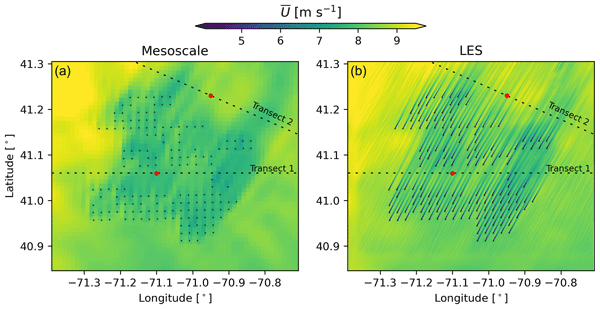
The independent physics check on the two assumptions that move a project's energy yield most: what the wind actually does over the site, and how much of it the turbines take from each other. Where the terrain is steep, the array is large, or a neighbour sits upwind, the engineering models behind a standard assessment are being run outside the conditions they were tuned in, and the error lands directly in P50 and P90.
Independent review is usually the right place to start, and often the sharper product: a lender’s engineer wants a second pair of eyes on the assessment in front of them, not a third assessment. Where a full energy yield assessment is the right scope, we run it within the IEC 61400-15 framework and state plainly what is modelled, what is measured, and what the uncertainty rests on.
Aero-elastic simulation for onshore and offshore turbines; aero-hydro-servo-elastic coupling for floating platforms; site-specific design verification across regimes.
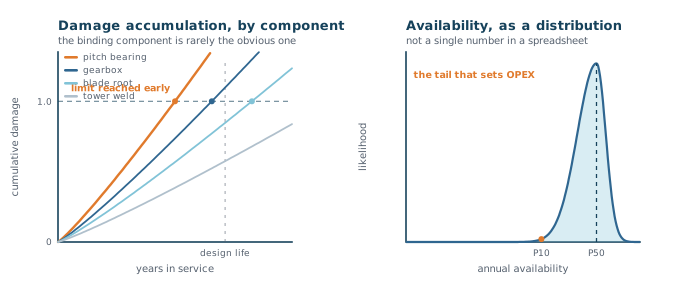
A component-level view of what installed assets actually do over their lifetime: reliability modelled as an engineering question, turbine by turbine, with the same aeroelastic physics that drives certification.
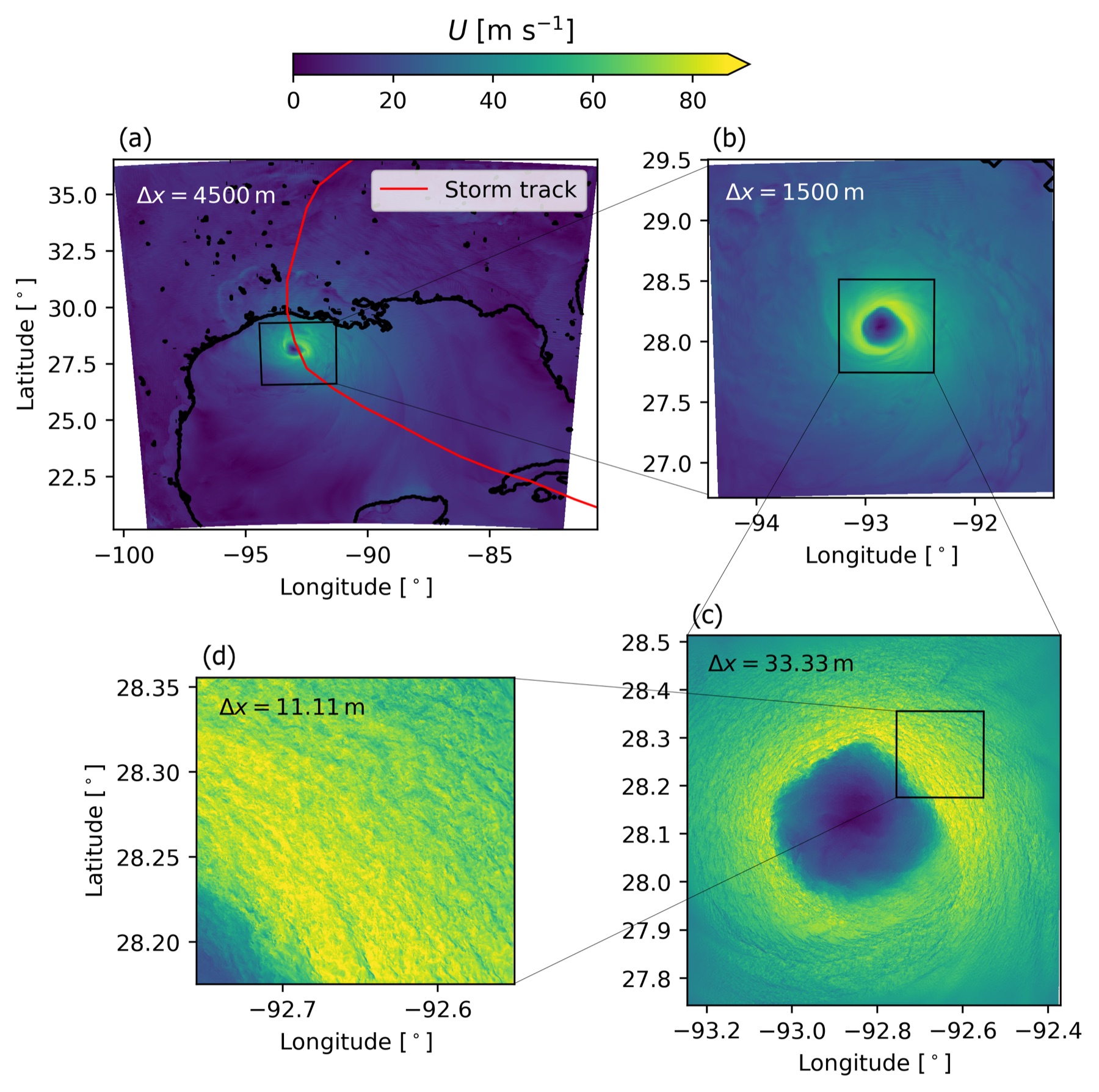
Tropical cyclones, derechos and severe storms break most of the assumptions in the standards. We model what a specific storm does to a specific machine, running the mesoscale-to-microscale chain down into turbulence-resolving large-eddy simulation and carrying it through to component-level structural response, then turning that into design, operating and survival decisions.
See the derecho reconstruction → · Read the tropical-cyclone research brief →
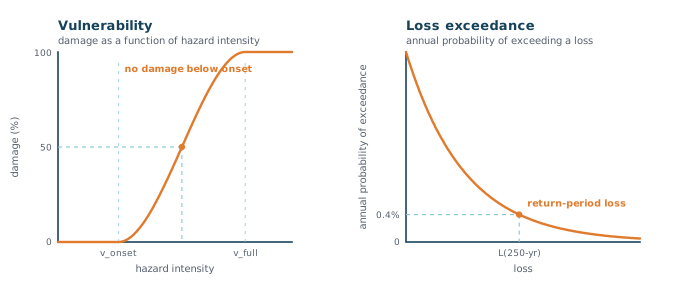
Physics-based hazard, exposure and response for a named asset, lease area or portfolio: the analysis a developer can stake a competitive bid on, an operator can plan around, and a lender's independent engineer will accept. When risk transfer needs a number, the same study gives brokers and their markets evidence built for scrutiny.
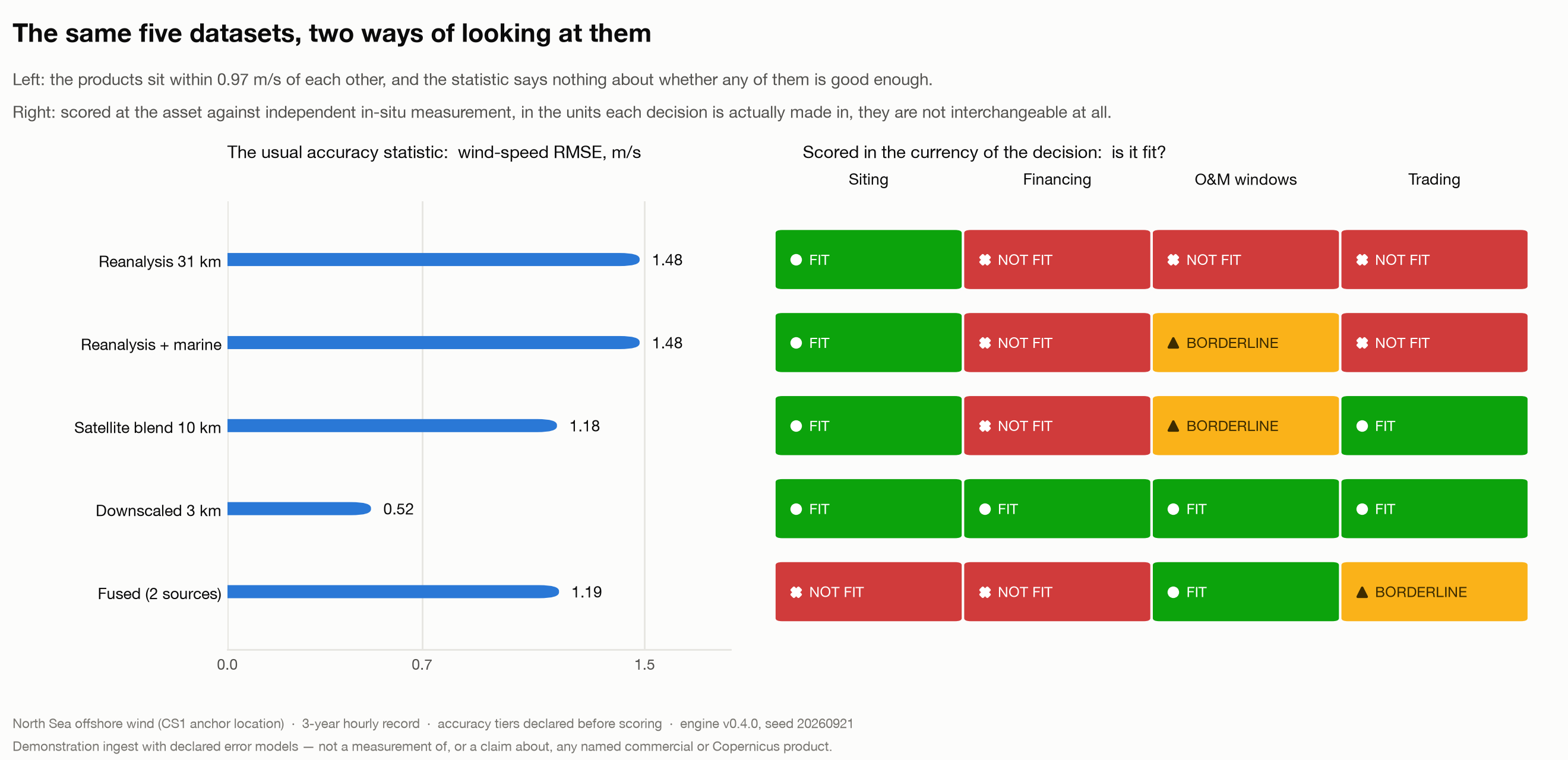
Every number rests on a dataset, and the usual accuracy statistics do not tell you whether that dataset is good enough for the decision in front of you. A global error statistic on wind speed says nothing about whether a product will misprice a capacity factor, miss a ramp, or fail to flag a low-generation week at your site. We score data in the units of the decision instead.
Validation runs against independent in-situ measurement, met masts, buoys and ground radiation stations, rather than scoring one model against another.
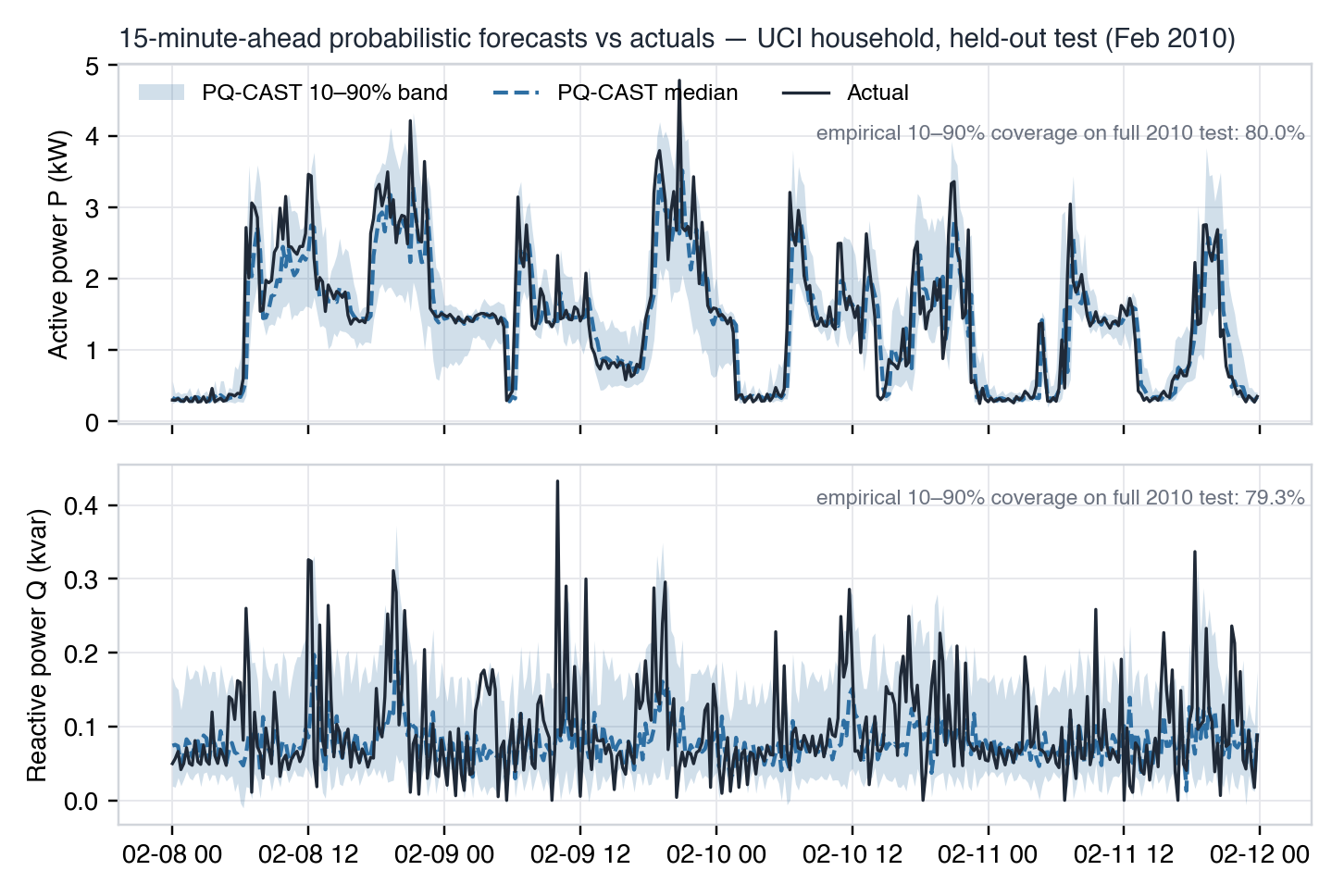
Probabilistic forecasting of generation and load with calibrated uncertainty bands, compressed to run on the edge device next to the meter. Built for grid operators, aggregators and asset operators whose decisions live in the upper percentiles, not the average.
Where a question is not yet covered by TurbineX, we answer it as a study on the same models. Each study ends in a document for an underwriting call, a placement, a bid or a close, and starts with a scoping call and a fixed quote.
If the question turns out not to need us, we will say so on the first call.
For one named asset: likely damage under extreme conditions, failure modes, repair time and downtime, written for an underwriting or lending decision.
One site, one asset, one hazard, answered at a fixed time and a fixed price. Typically four to six weeks and one written deliverable.
A second opinion on submissions, energy yield assessments and certification packages. Days, not months. Available as a standing retainer where the questions keep coming.
Blade, gearbox, bearing and foundation failures: what happened, why, and what it means for cover.
A work package inside a research consortium, or a joint proposal written from scratch. Send the call identifier and the deadline and you will have an answer on fit within a day.
For consultancies, certifiers and model vendors: we build the hazard, response or calibration science behind your deliverable, you keep the client and the brand. Confidential and conflict-checked before anything starts.
A study, a work package in a proposal, a second opinion, or specialist capacity behind your own deliverable. Tell us the question and the date you need it answered by.
Talk to us